


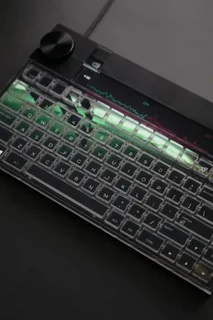
In today’s tech-savvy world, keyboards are no longer just typing tools—they are productivity hubs, gaming companions, and multimedia controllers. When it comes to mechanical vs. digital: choosing the right keyboard with display, understanding the key differences can make a huge impact on your typing experience and efficiency.
Understanding Mechanical Keyboards
Mechanical keyboards are built with individual mechanical switches under each key. These switches provide tactile feedback and a satisfying click with every press. Mechanical keyboards are often preferred by gamers, coders, and writers because they offer durability, precision, and customizable key response.
Advantages of Mechanical Keyboards:
- Durability: Most mechanical switches can last for 50 million keystrokes or more.
- Tactile Feedback: Each keypress gives a physical sensation, reducing typing errors.
- Customizability: Keycaps and switches can be swapped to suit personal preferences.
Some mechanical keyboards also include integrated displays, allowing users to see notifications, system stats, or even media controls directly on the keyboard. This feature can significantly enhance workflow efficiency.
Exploring Digital Keyboards
Digital keyboards, also called membrane or scissor-switch keyboards, operate with pressure pads that complete a circuit when pressed. They are typically quieter, lighter, and more affordable than mechanical keyboards.
Advantages of Digital Keyboards:
- Quiet Operation: Ideal for shared or office environments.
- Compact Design: Lightweight and portable.
- Cost-Effective: Usually cheaper than mechanical counterparts.
Many modern digital keyboards now come with built-in displays, offering users the ability to monitor applications, adjust settings, or even check notifications without looking at their computer screen.
Mechanical vs. Digital: Choosing the Right Keyboard With Display
When deciding between mechanical vs. digital: choosing the right keyboard with display, consider the following factors:
- Usage Type:
- If you type for long hours or require high-speed, precise input, mechanical keyboards are usually the better choice.
- If you need portability and quieter operation, digital keyboards may be more suitable.
- Budget:
- Mechanical keyboards are typically more expensive due to their complex construction and durability.
- Digital keyboards offer a cost-effective solution while still providing display features.
- Aesthetic and Functionality:
- Both mechanical and digital keyboards now offer sleek designs and integrated displays, but mechanical models often provide more customization options for lighting and display layouts.
- Maintenance:
- Mechanical keyboards require occasional cleaning but are easier to repair.
- Digital keyboards are harder to repair if something goes wrong, but maintenance is usually minimal.
Final Thoughts
Choosing the right keyboard depends on your specific needs, preferences, and budget. Whether you prioritize tactile feedback, longevity, and high-performance (mechanical) or quiet, compact, and affordable (digital), both options now offer advanced display features that enhance usability. Understanding mechanical vs. digital: choosing the right keyboard with display ensures you make an informed decision that boosts productivity and typing satisfaction.
