


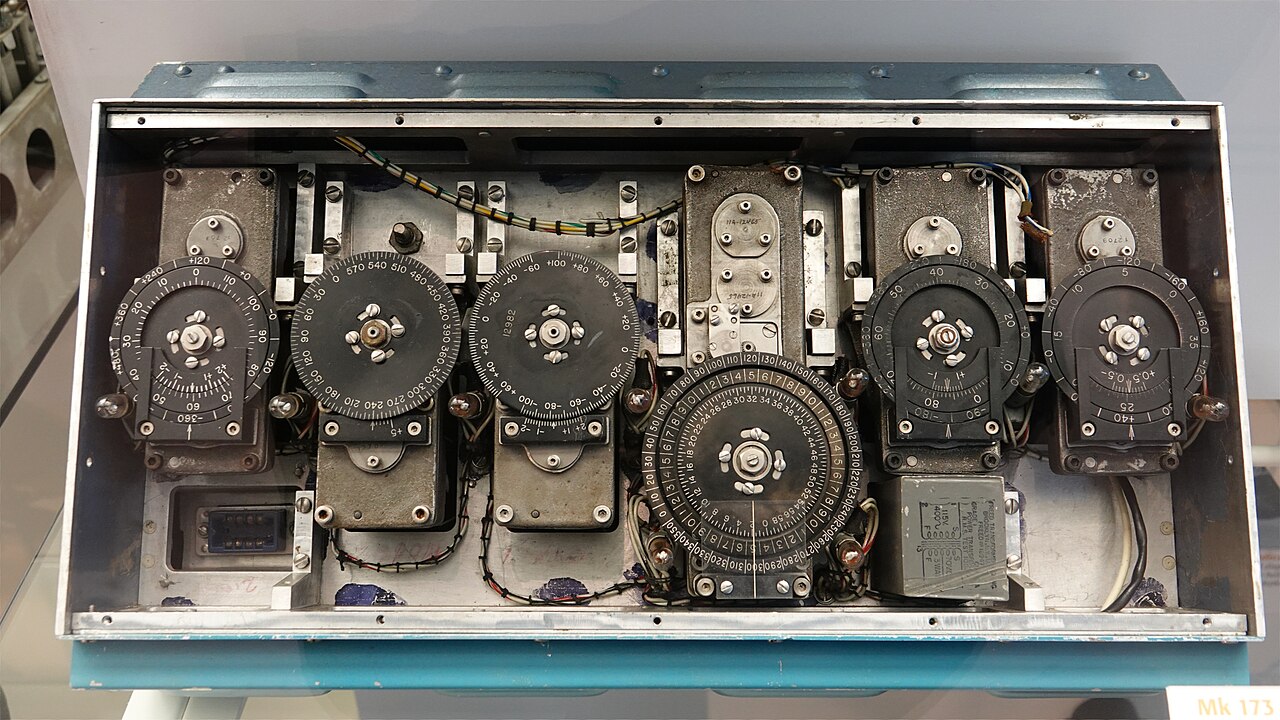
Autonomous driving technology depends on highly accurate positioning and motion sensing systems to ensure safe and reliable navigation. One of the most important technologies enabling this capability is the Inertial Navigation System Applications in Autonomous Vehicles, which plays a critical role in supporting real-time decision-making when external signals are weak or unavailable.
Introduction to Inertial Navigation Systems
An Inertial Navigation System (INS) is a self-contained navigation method that uses motion sensors such as accelerometers and gyroscopes to estimate a vehicle’s position, velocity, and orientation. Unlike GPS, it does not rely on external signals, making it highly useful in environments like tunnels, urban canyons, or underground roads.
The Inertial Navigation System Applications in Autonomous Vehicles are especially important because autonomous cars must maintain continuous awareness of their location even when satellite signals are lost or degraded.
How Inertial Navigation Works in Autonomous Vehicles
INS works by continuously measuring the vehicle’s acceleration and angular velocity. These measurements are processed to calculate changes in position over time. However, small errors can accumulate, which is why INS is often combined with GPS and other sensors in a process called sensor fusion.
In modern self-driving systems, the Inertial Navigation System Applications in Autonomous Vehicles are integrated with LiDAR, radar, and camera systems to improve overall navigation accuracy and reliability.
Key Applications in Autonomous Driving
1. Dead Reckoning in GPS-Denied Areas
When GPS signals are unavailable, INS helps estimate the vehicle’s position using its last known coordinates and motion data. This ensures continuity in navigation.
2. Lane-Level Positioning
High-precision INS enables autonomous vehicles to stay accurately within lanes, especially at high speeds or in complex road conditions.
3. Stability Control and Motion Tracking
INS data helps control vehicle stability by monitoring roll, pitch, and yaw, which is essential for safe driving maneuvers.
The Inertial Navigation System Applications in Autonomous Vehicles are particularly valuable in these scenarios because they provide uninterrupted motion tracking even in challenging environments.
Integration with Other Sensor Systems
Autonomous vehicles rarely rely on INS alone. Instead, it is combined with other technologies in a sensor fusion framework:
- GPS provides global positioning data
- LiDAR maps surrounding environments
- Cameras detect lanes, traffic signs, and obstacles
- Radar measures object speed and distance
By combining these inputs, the Inertial Navigation System Applications in Autonomous Vehicles become more accurate and resilient, reducing drift errors and improving decision-making.
Challenges and Limitations
Despite its advantages, INS has some limitations:
- Drift over time: Small sensor errors accumulate, leading to positional inaccuracies
- High cost: Precision-grade sensors can be expensive
- Calibration needs: Regular calibration is required for optimal performance
Even with these challenges, the Inertial Navigation System Applications in Autonomous Vehicles remain essential for achieving reliable autonomous navigation.
Future of Inertial Navigation in Autonomous Systems
As sensor technology improves and artificial intelligence becomes more advanced, INS will become even more accurate and cost-effective. Future autonomous vehicles will likely depend on tighter integration between INS, AI-based perception systems, and high-definition mapping.
Ultimately, the Inertial Navigation System Applications in Autonomous Vehicles will continue to evolve as a foundational technology, ensuring safety and reliability in next-generation transportation systems.
Conclusion
Inertial navigation plays a crucial role in enabling autonomous vehicles to function safely and efficiently in all environments. From dead reckoning to sensor fusion, its applications are wide-ranging and essential. As technology advances, the importance of the Inertial Navigation System Applications in Autonomous Vehicles will only increase, making it a core component of future mobility solutions.
